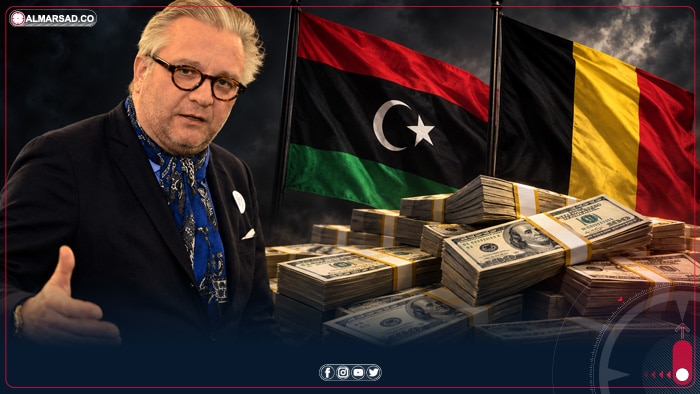
Second licensing round tests NOC’s ability to keep attracting investment after Bengdara
Libya – An economic article published under the name “Evertise” in the business section of the Inter Press Service news agency site addressed Libya’s preparation to launch a second oil-sector licensing round, arguing that it will test the National Oil Corporation’s ability to continue attracting investment and to build on reforms the article attributed to Farhat Bengdara’s period as NOC chairman.
Expanding the bid round to the offshore Pelagian Basin
The article, which Al-Marsad followed and from which it translated the main points, said the round’s opening is expected in late 2026 or early 2027, under an updated fifth-generation exploration and production-sharing agreements framework that widens the scope of bids to include the offshore Pelagian Basin alongside the Sirte, Murzuq and Ghadames basins covered in the first round.
It pointed to the corporation’s readiness to launch a centre dedicated to exploration and production activities during the “Libya Energy and Economic Summit 2027”, scheduled to be held in the capital, Tripoli, next January.
It added that Libya’s oil production in 2026 is approaching 1.4 million barrels a day — a level it described as the highest in a decade — while the year-end target is 1.6 million barrels a day, reaching two million barrels a day over the longer term.
First-round outcome and production-sharing agreements
The article said the corporation announced on 11 February the results of the first licensing round in 17 years, with 5 of 20 areas on offer awarded to winning companies, including US firm Chevron and Nigeria’s Aiteo, each of which won individually.
It said the remaining contracts were distributed among three consortia: the first comprising Spain’s Repsol and Britain’s BP; the second Eni North Africa, a subsidiary of the Italian company, and QatarEnergy; and the third Repsol, Hungary’s MOL Group and the Turkish Petroleum Company.
It noted that by June most of these awards had turned into signed production-sharing agreements, while Chevron’s agreement was concluded later, covering Area 106 in the Sirte Basin, spanning 7,437 square kilometres, and turning months of talks into a legal framework for work.
Bengdara and the reforms that preceded companies’ return
The article addressed Farhat Bengdara’s chairmanship of the corporation, which ran from July 2022 to January 2025, noting that production rose during that period from 660,000 barrels a day when he took office to more than 1.4 million barrels a day by the time he left the post.
The article’s author considered that production growth in that period helped create the conditions for international companies to return to competing for Libyan exploration areas after a 17-year interruption.
It quoted Bengdara as saying: “The strategy was to increase oil and gas production, develop the infrastructure that needs massive investment, and attract international companies to invest in Libya.”
Four pillars for building confidence in the corporation
According to the article, the international consultancy Kearney helped draft a strategy based on four tracks pursued in parallel. The first was building capacity and transforming the corporation into an entity that operates to international standards, rather than working as a holding company under wartime conditions.
It added that the second pillar focused on environmental performance through an initiative the corporation announced during the 28th Conference of the Parties to the climate convention in Dubai, while the third pillar was developing the gas sector on the basis of a dedicated strategy prepared with Ernst & Young.
The fourth pillar concerned corporate governance, through engaging Deloitte to strengthen transparency inside the corporation — a factor the writer regarded as essential for building the confidence of international companies that would commit to investments and exploration rights worth billions of dollars.
It said the success of these tracks depends on their integration, as developing capacity without a clear gas strategy, or reforming governance without environmental commitments, leaves gaps that companies can spot during pre-investment due diligence and assessment.
$40 billion to reach two million barrels a day
The article noted that Libya holds Africa’s largest proven oil reserves, arguing that the fundamental shift was not in its geological resources but in how far international companies were convinced they could work with an institution that manages licences and production data and enforces contract terms over the next two or three decades.
The writer took the view that the award of the five areas and the production-sharing agreements that followed reflect that some of the world’s major companies have that confidence.
It added that reaching production of two million barrels a day requires roughly $40 billion in new investment, according to the corporation’s estimates, stressing that holding reserves alone is not enough to attract that volume of capital without investors’ confidence in the body that manages the sector.
A test of reform continuity after the leadership transition
The article considered that the second round will test the corporation’s ability to maintain institutional discipline and apply the four pillars on a wider scale, covering additional basins and a longer list of companies bidding.
The writer concluded that the first round showed, in his assessment, international companies’ readiness to return when they have convincing institutional reasons, linking that return to reforms he attributed to Bengdara’s period, while the second round will reveal how far the corporation can preserve those factors after he left the chairmanship.