The security of Benghazi, Sebha and Tripoli is indivisible
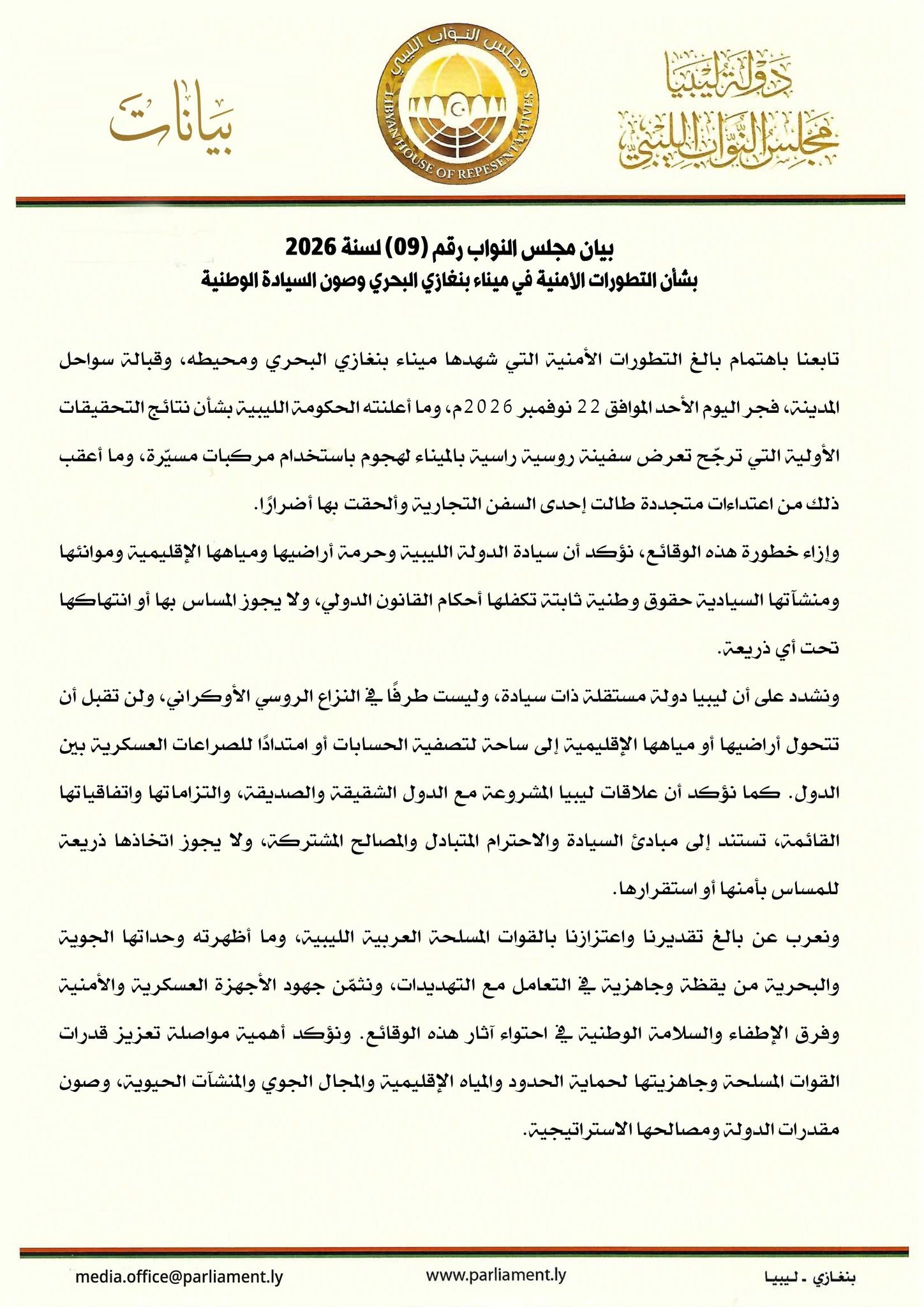
LIBYA – The House of Representatives has stressed that Libya is an independent, sovereign state and not a party to the Russia-Ukraine conflict, and that it will not accept its territory or territorial waters being turned into an arena for settling scores or an extension of military conflicts between states.
This came in the House’s Statement No. 09 of 2026, issued in Benghazi on Sunday, 22 November 2026 (12 Jumada al-Akhirah 1448 AH), on the security developments at Benghazi port and safeguarding national sovereignty.
Developments at the port and completing the investigations
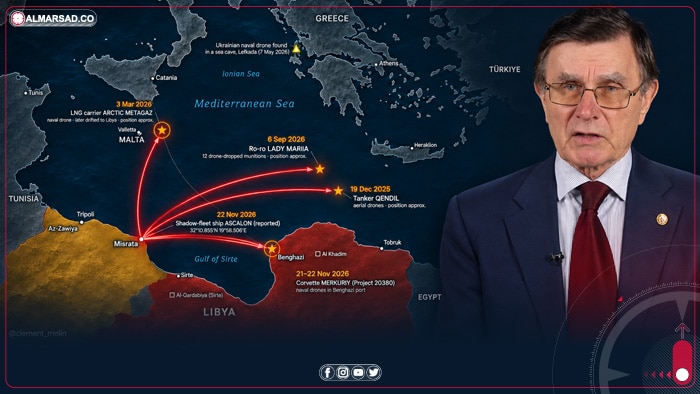
The House said it had followed with close attention the security developments at Benghazi port, its surroundings and off the city’s coast at dawn on Sunday, 22 November 2026, as well as the Libyan Government’s announcement of the initial findings of investigations suggesting that a Russian ship moored at the port had come under attack using unmanned vehicles, and the renewed attacks that followed, which struck and damaged a commercial ship.
It stressed the need to complete the technical and security investigations to uncover the circumstances of these incidents and determine responsibility in light of their final findings, with the Libyan state retaining its full rights to take legitimate legal and diplomatic measures in accordance with international law, so as to protect its sovereignty and national interests.
Safeguarding sovereignty and respecting international relations
The House affirmed that the sovereignty of the Libyan state and the inviolability of its territory, territorial waters, ports and sovereign facilities were established national rights guaranteed by international law, which may not be infringed or violated under any pretext.
It added that Libya’s legitimate relations with brotherly and friendly states, and its existing commitments and agreements, were based on the principles of sovereignty, mutual respect and common interests, and could not be used as a pretext to undermine its security or stability.
In this context, the House called on all regional and international parties to respect Libya’s sovereignty and the independence of its national decision-making, and to refrain from any actions that would transfer foreign conflicts to its territory or threaten its security and stability. It stressed Libya’s commitment to balanced and constructive relations with its various partners, to fulfilling its international obligations and to strengthening cooperation based on trust and mutual respect.
Appreciation for the armed forces and strengthening their capabilities
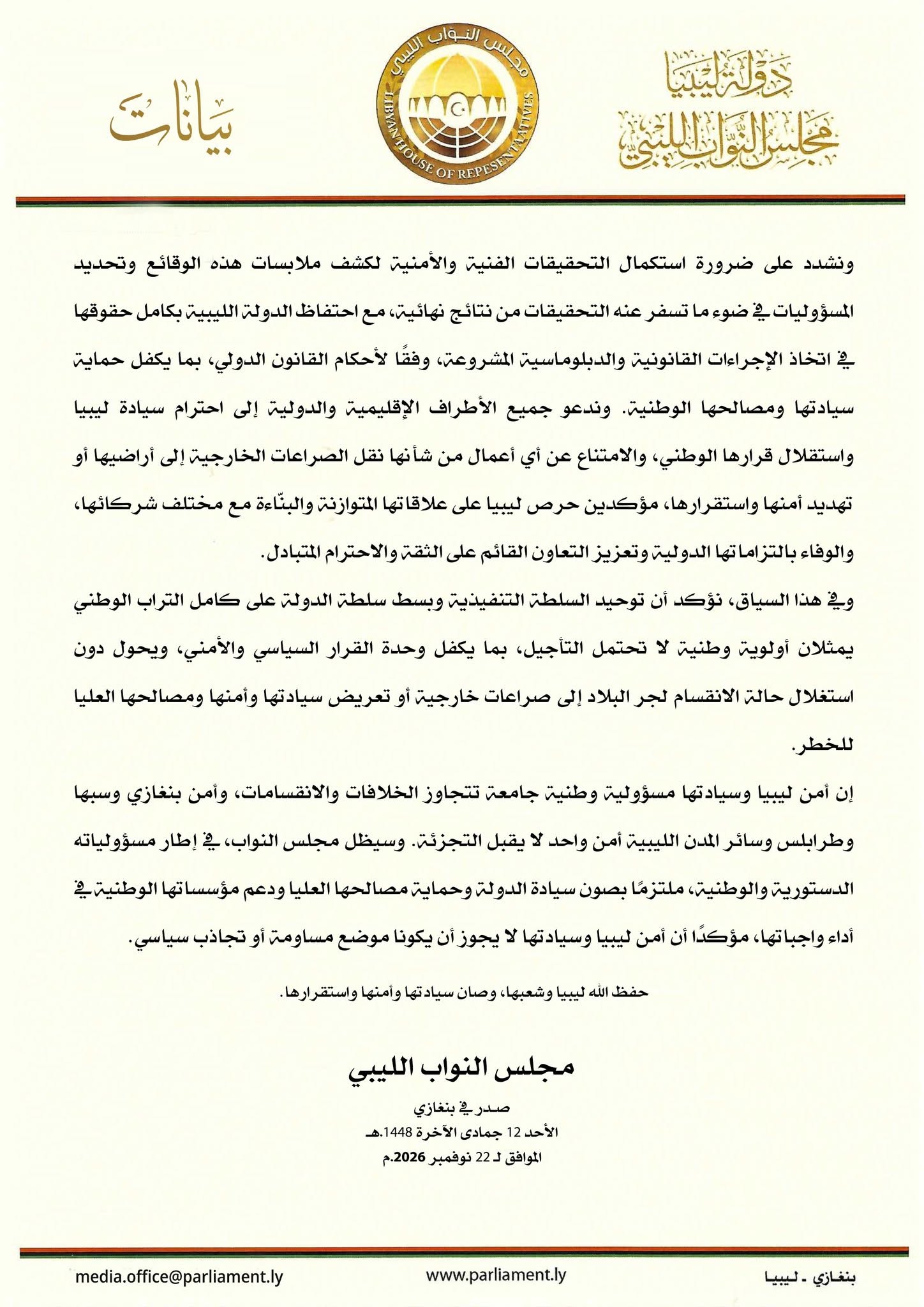
The House expressed its deep appreciation of and pride in the Libyan Arab Armed Forces and the vigilance and readiness shown by their air and naval units in dealing with the threats, commending the efforts of the military and security services and the firefighting and National Safety teams in containing the effects of these incidents.
It stressed the importance of continuing to strengthen the capabilities and readiness of the armed forces to protect the borders, territorial waters, airspace and vital facilities, and to safeguard the state’s resources and strategic interests.
Unifying authority and preventing exploitation of the division
The House linked the country’s protection to unifying the executive authority and extending state authority over the entire national territory, stressing that both were a national priority that could not be postponed, as this would ensure unity of political and security decision-making and prevent the state of division from being exploited to drag the country into foreign conflicts or to endanger its sovereignty, security and supreme interests.
A national responsibility that transcends differences
The House stressed that Libya’s security and sovereignty were a collective national responsibility that transcended differences and divisions, and that the security of Benghazi, Sebha, Tripoli and all other Libyan cities was one and indivisible.
It affirmed that, within the framework of its constitutional and national responsibilities, it would remain committed to safeguarding the state’s sovereignty, protecting its supreme interests and supporting its national institutions in carrying out their duties, stressing that Libya’s security and sovereignty must not be the subject of bargaining or political wrangling.
The statement concluded with a prayer for the protection of Libya and its people and the preservation of its sovereignty, security and stability.