Salehin Abdulnabi elected Speaker of the House of Representatives
LIBYA – The House of Representatives, at its session held on Tuesday, 6 October 2026, at its headquarters in Benghazi, elected a new Presidency Bureau headed by Salehin Abdulnabi, with Tariq Al-Ashtar as First Deputy Speaker and Misbah Douma as Second Deputy Speaker, and completed the selection of the House rapporteur, his deputy and the monitors. The session’s results were welcomed by the General Command of the Libyan Arab Armed Forces and the Libyan Government, and congratulated by Presidential Council member Musa Al-Koni, accompanied by calls to strengthen institutional work, end the division and unify state institutions.
Benghazi session and election of the Speaker
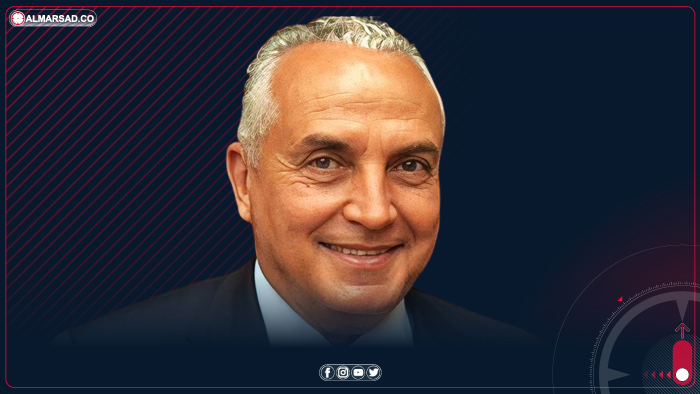
House of Representatives spokesman Abdullah Bliheg, in a series of statements on the session’s proceedings, announced that it opened under the chairmanship of Misbah Douma, in his capacity as Second Deputy Speaker of the House, to elect the Presidency Bureau, before announcing the election of House of Representatives member Salehin Abdulnabi as Speaker of the House.
Members then moved to elect the First Deputy Speaker, in a contest between Tariq Al-Ashtar, Al-Sadiq Hamouda and Ezzedine Quwaireb. The first round produced 43 votes for Al-Ashtar, 35 for Hamouda and 32 for Quwaireb, with the contest decided in a second round limited to Al-Ashtar and Hamouda.
According to Bliheg, Tariq Al-Ashtar won the post of First Deputy Speaker of the House of Representatives with a majority of 63 votes, against 47 votes for Al-Sadiq Hamouda.
Presidency Bureau and monitors completed
Bliheg also announced the unanimous election of Misbah Douma as Second Deputy Speaker of the House of Representatives, and the unanimous election of Zayed Hadiya as House rapporteur and Mohamed Tamer as deputy rapporteur.
The House completed the selection of its monitors by electing members Suleiman Suwaiker, Mohamed Amdour and Saleh Fahima, according to the spokesman.
General Command: respect for institutions and support for state stability
The General Command of the Libyan Arab Armed Forces, in a statement by Commander-in-Chief Field Marshal Khalifa Haftar, welcomed the election of the new Presidency Bureau of the House of Representatives headed by Salehin Abdulnabi, his deputies Misbah Douma and Tariq Al-Ashtar, and the remaining members of the Presidency Bureau, wishing them success in carrying out their duties in the service of the country, the interests of the Libyan people and their aspirations.
The statement affirmed the Libyan Arab Armed Forces’ respect for national institutions and their independence, and their keenness to support every effort that contributes to strengthening stability, ending the state of division and moving towards unifying state institutions.
It stressed that everyone’s responsibility is to preserve Libya and its unity, put its supreme interest first, and work in a positive spirit that opens the way to a more stable phase in which state institutions join forces to serve the citizen and protect the homeland.
Al-Koni: parliamentary cohesion a pillar of national consensus
Presidential Council member Musa Al-Koni, in a letter dated 6 October 2026 addressed to Salehin Abdulnabi Al-Obaidi, congratulated him on his election as Speaker of the House of Representatives and on winning the confidence of House members.
Al-Koni said the election carries particular significance at the present stage, noting that the effectiveness and cohesion of the legislative institution are two essential pillars for consolidating national consensus, safeguarding the unity of state institutions and preparing the ground for inclusive national milestones.
He wished him success in discharging this national responsibility and in raising the performance of the legislative institution in a way that serves Libya and its people and supports the country’s stability, affirming his keenness to continue coordination and consultation with the House of Representatives in support of joint national work and to strengthen an inclusive political path.
Libyan Government welcomes and praises previous presidency
The Libyan Government welcomed the election of a new Presidency Bureau of the House of Representatives in its statement No. 11 of 2026, issued in Benghazi on 6 October 2026 in the name of its head, Dr Osama Saad Hammad.
The government said the election came within the framework of the amendment to the House’s rules of procedure adopted by its members and the adoption of the parliamentary-term system, and the consequent election of the Speaker and his two deputies according to the rules and procedures approved by the House and by direct ballot among its members.
It congratulated the elected Speaker of the House of Representatives and his two deputies, wishing them success in carrying out their national responsibilities, and that this phase would be a continuation of efforts to strengthen unity of ranks, consolidate institutional work and entrench the House of Representatives as one of the most important pillars of the state and its constitutional institutions.
The government also expressed thanks and appreciation to Counsellor Aguila Saleh, the former Speaker of the House of Representatives, and to his First Deputy Fawzi Al-Nuwairi, in recognition of the efforts they made and the national responsibilities they bore throughout the years they led the House, and the exceptional circumstances and challenges they faced during a phase it described as critically delicate in the country’s history, during which the House of Representatives contributed to safeguarding the legislative path and discharging its national responsibilities.
Call for a unified executive and an end to division
The government affirmed that peaceful institutional rotation, adherence to the rules of democratic work and respect for the will of institutions form the essence of building the state Libyans aspire to, considering that differences in positions and responsibilities offer an important opportunity to renew national work, unify efforts and direct them towards overcoming the phase of division.
It called for the will of Libya’s people and institutions, within a legitimate and institutional framework, to move towards a unified executive authority that enjoys broad national consensus, brings Libyans together rather than divides them, and puts a real end to the multiplicity of centres of executive decision-making.
It stressed that the coming phase requires all national forces, institutions and figures to put Libya’s interest above all other considerations, and to rally around an inclusive national project that ends the division, unifies state institutions, safeguards its sovereignty and rebuilds trust among Libyans, leading to one state, one set of institutions and one national decision.
The government affirmed its continued cooperation with the Presidency Bureau of the House of Representatives, calling for this milestone to form a new step on the path of national consensus, and for everyone’s efforts to combine to reach a comprehensive national settlement that lays the foundation for a stable phase that ends the transitional stages and opens the way for Libyans to choose their permanent institutions by their free will.