Bousaida links rejection of 4+4 to struggle for influence
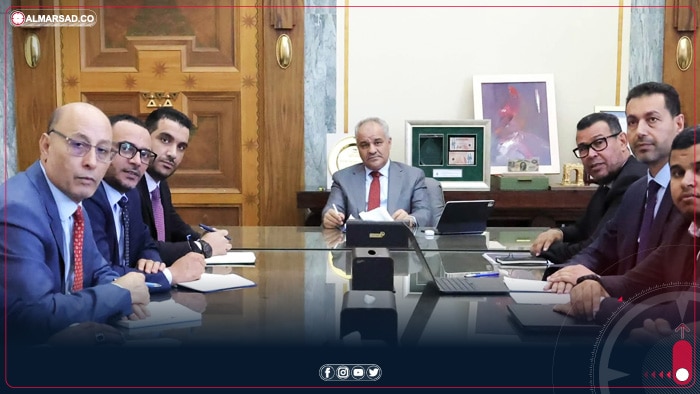
LIBYA – Libyan writer Omar Bousaida has said the High Council of State’s rejection of the 4+4 outcomes is, in his view, not merely a political disagreement or a matter of procedural objections, but reflects obstruction that he said expresses the determination of an influential group to control political decision-making and protect its gains and positions of influence.
Rejecting consensus for fear of losing influence
Speaking to the Hafryat website, Bousaida said this approach was, in his assessment, rooted in a philosophy of holding on to power. He described the rejection at this stage as “a ‘flight-forward’ strategy”, arguing that the rejecting parties realise any national consensus built on balanced outcomes could reshape the balance of power and limit their ability to retain their influence.
Accusations against political Islam current
He added that the rejection exposed what he described as “the mastermind of obstruction” within the council, saying that, in his view, the political Islam current is acting on narrow partisan calculations and focusing on positions of power and influence.
Bousaida said what he called “the fingerprints of ideological direction” could be seen in the language of the rejection and in the mechanisms used to obstruct consensus within the High Council of State. He described these as political and organisational methods that, he said, have been associated with the Muslim Brotherhood current and its allies.
He went on to say that, in his assessment, this current relies on obstructing major agreements and dismantling political initiatives when they do not guarantee it broad influence in political and administrative institutions, noting that disputes over the political process cannot be separated from the struggle for positions of influence within state institutions.
Organisational tools and manoeuvring inside institutions
Bousaida said that, despite what he described as the shrinking of its popular base, this current relies on tools of political and organisational influence and on manoeuvring inside institutions, pointing to its ability to sway influential blocs within the council.
He stressed that the rejection was not, in his view, a unified institutional position, but reflected “organisational dictation” aimed at blocking political arrangements that go beyond this current’s influence or reduce the areas it controls in western Libya.
Political and security overlap in western Libya
On the nature of the overlap between the various political forces, Bousaida said it was not simply a political coincidence but, in his assessment, a complementarity of roles between platforms of discourse on the political and security scene and the field and ideological networks that he said operate within the sphere of influence of political Islam forces in the western region.
He said the rejecting figures, led by Naima Al-Hami and her group, were, as he described them, an executive “spearhead” for broader agendas. He explained that, in his view, they serve as a civilian and parliamentary front for positions that he said serve political and security power centres linked to political Islam networks and their allies.