Instruction to investigate and coordinate with the Russian authorities
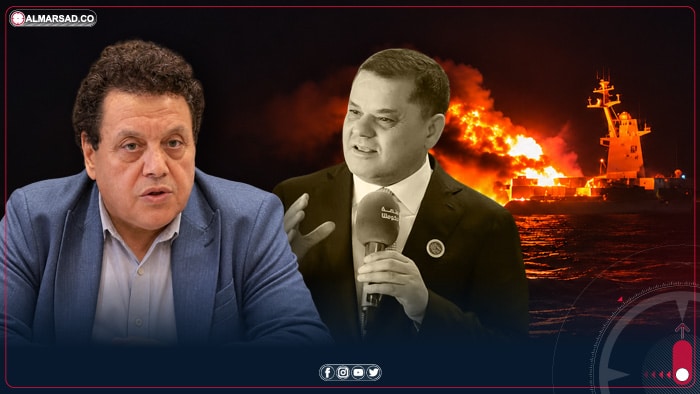
LIBYA – The Libyan Government has announced that it is following the repercussions of the explosion that occurred at dawn on 22 November 2026 inside Benghazi Naval Base, explaining that the initial findings of the investigation indicate that it took place on board a Russian ship that had been moored at the port, and that the vessel was likely to have come under attack using unmanned vehicles.
The ship’s stopover and the safety of port facilities
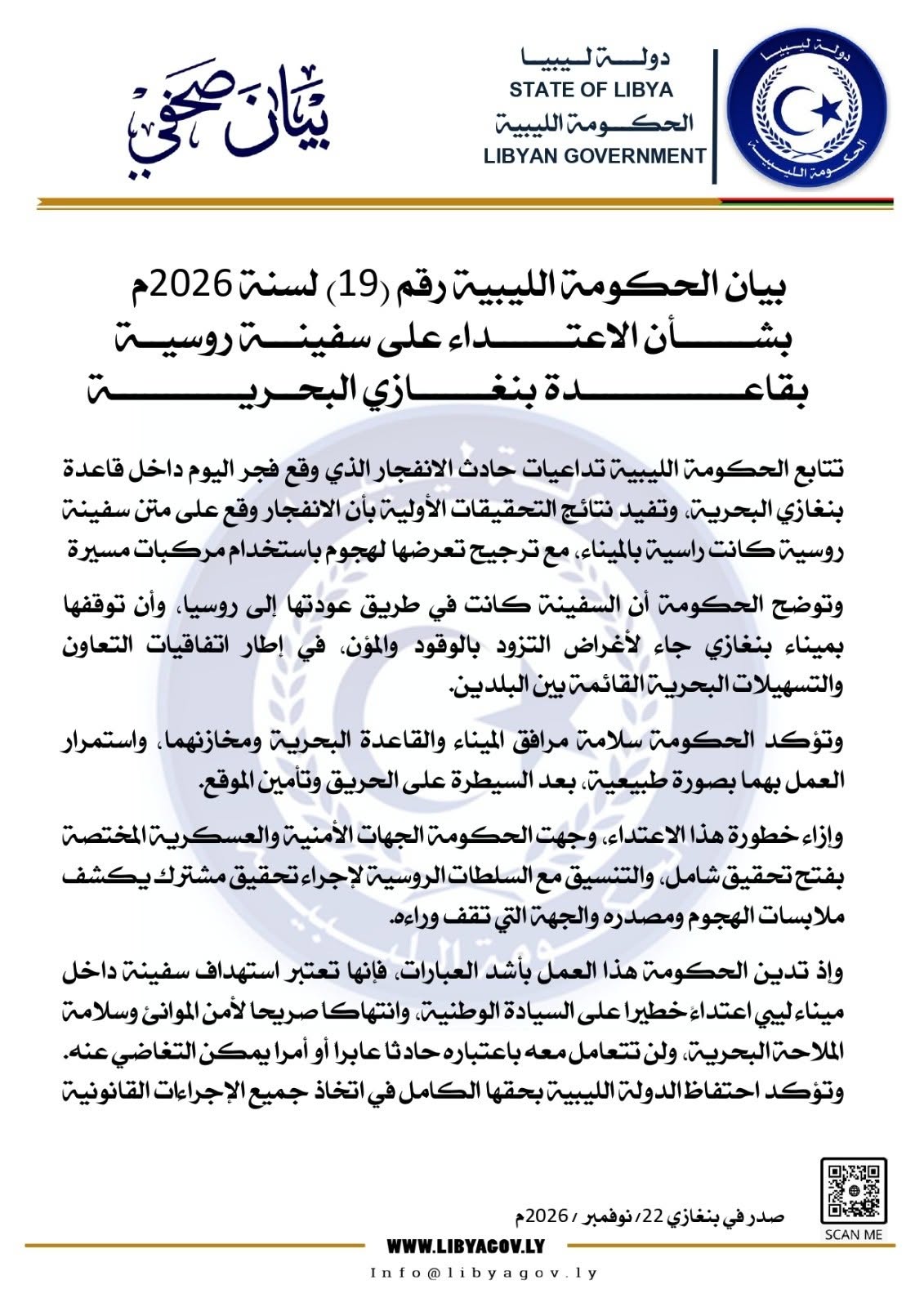
The government explained, in Libyan Government Statement No. 19 of 2026, a copy of which was received by Al-Marsad, that the ship had been on its way back to Russia and that its stop at Benghazi port had been to take on fuel and provisions, under the existing agreements on cooperation and maritime facilities between the two countries.
It confirmed that the port and naval base facilities and their warehouses were safe, and that work at both was continuing normally after the fire had been brought under control and the site secured.
A joint investigation and legal and diplomatic measures
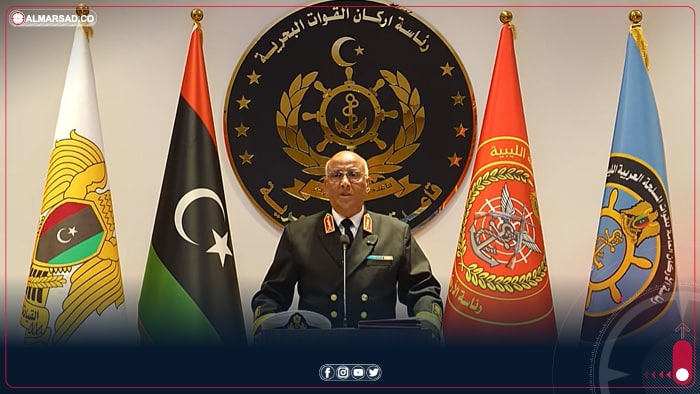
In view of what it described as the seriousness of the attack, the government directed the competent security and military authorities to open a comprehensive investigation and to coordinate with the Russian authorities on a joint investigation to establish the circumstances of the attack, its source and the party behind it.
The government condemned the act in the strongest terms, considering the targeting of a ship inside a Libyan port a serious assault on national sovereignty and a clear violation of port security and the safety of maritime navigation, and affirming that it would not treat it as a passing incident or as something that could be overlooked.
It also affirmed that the Libyan state reserved its full right to take all necessary legal and diplomatic measures, and to hold to account anyone found to have been involved in planning, carrying out or supporting the attack.
The government’s position on external conflicts
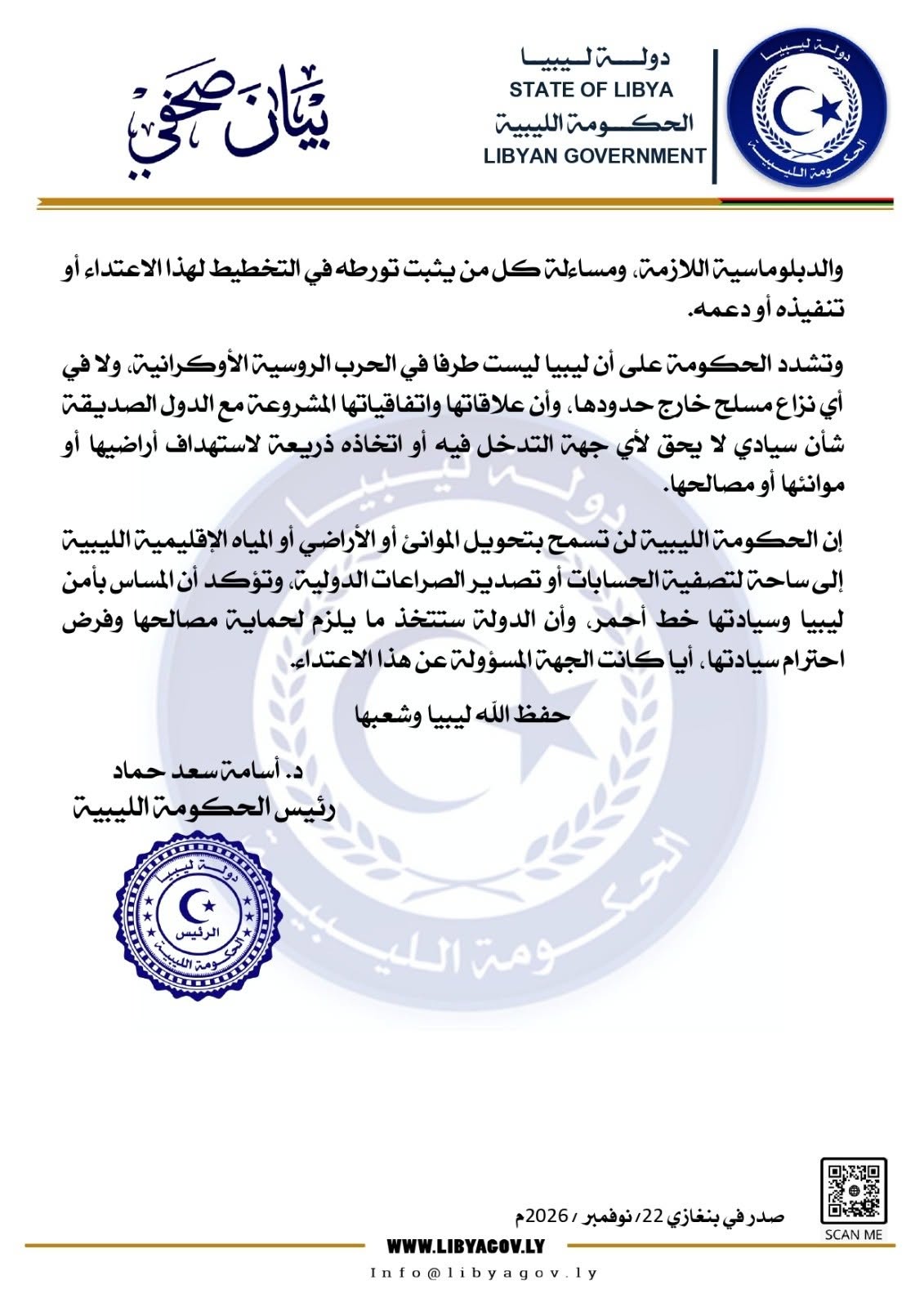
The government stressed that Libya was not a party to the Russia-Ukraine war, nor to any armed conflict beyond its borders, and that its lawful relations and agreements with friendly states were a sovereign matter that no party had the right to interfere in or to use as a pretext to target its territory, ports or interests.
Protecting sovereignty and rejecting the export of conflicts
It affirmed that it would not allow Libyan ports, territory or territorial waters to be turned into an arena for settling scores or exporting international conflicts, stressing that harming Libya’s security and sovereignty was a “red line”, and that the state would take the necessary measures to protect its interests and to enforce respect for its sovereignty, regardless of which party was responsible for the attack.