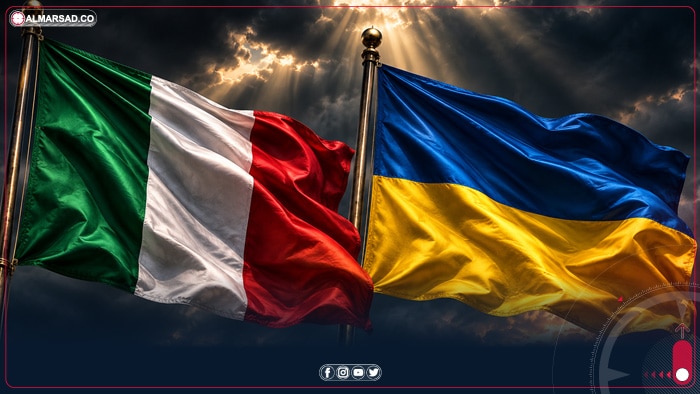
Libyan sovereignty and Mediterranean security put to the test
LIBYA – Libyan political analyst Hossam Fenish has said that the transfer of the repercussions of the Russia-Ukraine war to the southern Mediterranean, after Russian ships were targeted in Benghazi port, represents a development with geopolitical dimensions that go beyond the bounds of the military confrontation and puts Libyan sovereignty and the security of the region to a genuine test.
The implications of Italy’s position
In comments to Erem News, Fenish said Italy’s position on the Ukrainian targeting of the Russian ships reflected a growing awareness of the risks of the conflict widening, given Libya’s strategic importance in Rome’s calculations as a key partner in energy, investment, trade and the security of maritime navigation.
He added that Tajani informing his Ukrainian counterpart of the need to respect Libyan sovereignty, as far as Italy was concerned, despite Rome’s continued support for Kyiv, carried a clear political message that supporting Ukraine did not mean accepting the transfer of the war’s repercussions into the southern Mediterranean’s vital sphere.
The risks of escalation and diplomatic action
Fenish affirmed that the effects of any further escalation would not be confined to Libya, but would extend to the security of energy supplies, sea lanes and European economic interests, leaving Rome needing to act diplomatically to contain the situation, whether by contacting the Libyan authorities or by pushing for a joint European position.
The political analyst asked whether the southern Mediterranean states, Italy first among them, would succeed in forming a joint diplomatic position that protects Libya’s sovereignty, safeguards Mediterranean security, contains the escalation and prevents Libyan ports from becoming a new extension of the Russia-Ukraine war, arguing that the next phase would reveal the answer.