Closure of Riyayna valve halts oil pumping to Zawiya
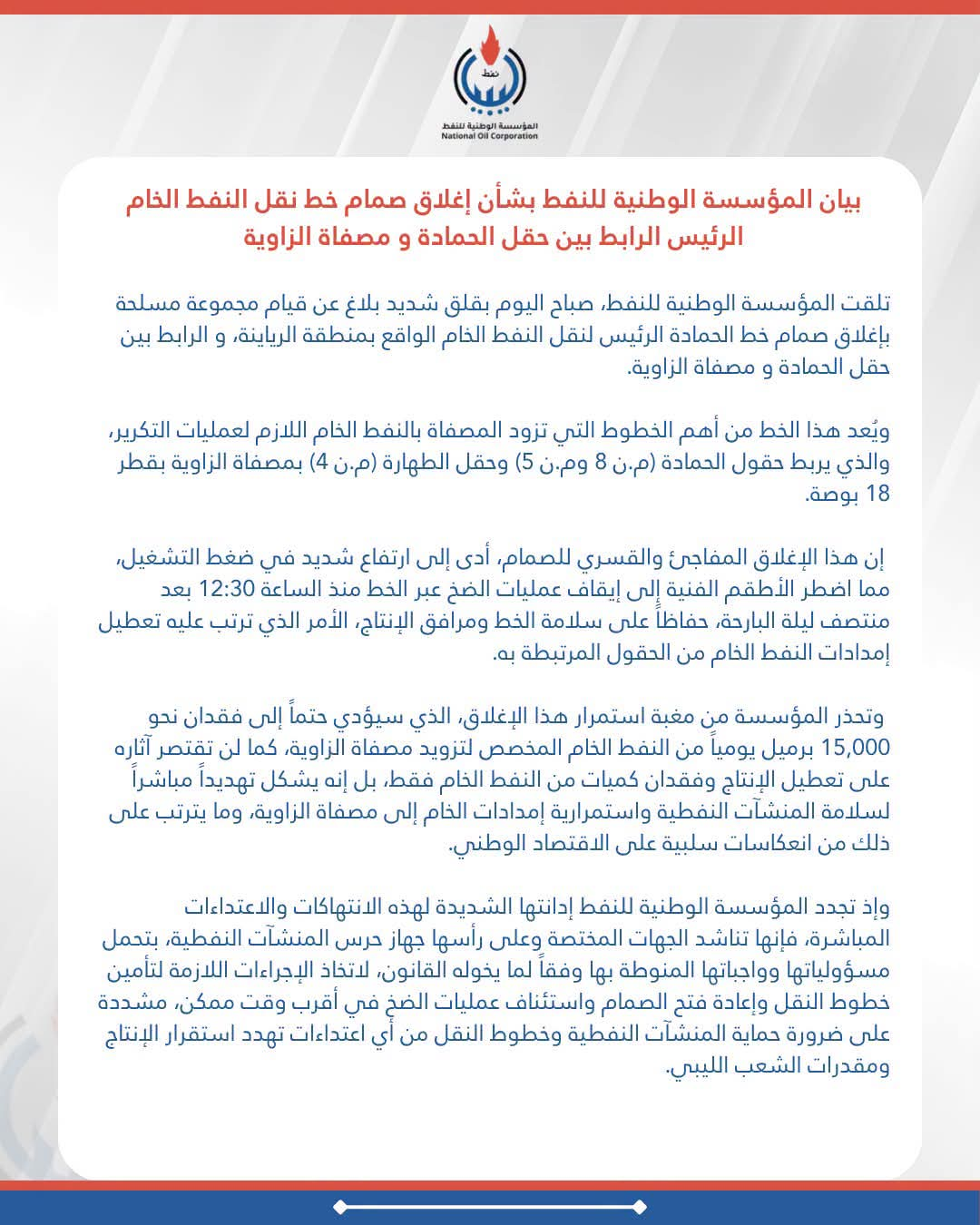
LIBYA – The National Oil Corporation (NOC) has warned that the continued closure of a valve on the main pipeline carrying crude oil from the Hamada field to the Zawiya refinery could cost around 15,000 barrels a day of supplies earmarked for the refinery, adding that pumping has been halted to protect the pipeline and its associated facilities.
Report of valve closure and rising operating pressure
In a statement, the corporation said it had received a report on Friday that an armed group had closed the valve on the main Hamada pipeline in the Riyayna area, which links the Hamada field to the Zawiya refinery.
It said the 18-inch pipeline is one of the refinery’s most important supply lines for the crude oil it needs for refining, connecting the Hamada fields NC8 and NC5 and the Tahara field NC4 to the Zawiya refinery.
The NOC added that the sudden, forced closure caused a sharp rise in operating pressure, forcing technical crews to stop pumping through the line since 12:30am on Friday to protect the pipeline and production facilities. This disrupted crude supplies from the fields connected to it.
Warning of economic fallout and risks to facilities
The corporation warned that a continued closure would mean the loss of around 15,000 barrels of crude a day that had been earmarked for the Zawiya refinery. It said the effects would go beyond disrupted production and lost volumes, threatening the safety of oil facilities and the continued supply of crude to the refinery, with possible negative consequences for the national economy.
Call to protect the pipeline and restart operations
The NOC renewed its condemnation of such attacks and called on the relevant authorities, first and foremost the Petroleum Facilities Guard, to fulfil their legal responsibilities and take the necessary measures to secure transport pipelines, reopen the valve and resume pumping as soon as possible.
It stressed the need to protect oil facilities and transport pipelines from attacks that threaten stable production and the resources of the Libyan people.