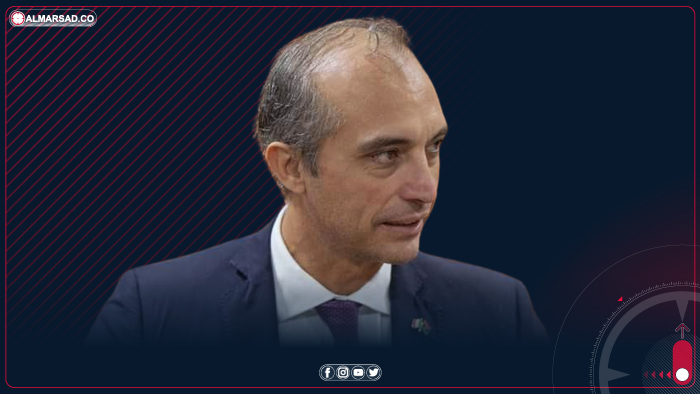
Al-Makhzoum sees political crisis nearing resolution
LIBYA – Saleh Al-Makhzoum, former deputy president of the General National Congress, has forecast that the accumulation of political events and the course of the current dialogues will lead to a comprehensive settlement in Libya, arguing that the efforts of the United Nations mission need clear support from the major international powers to ensure that its outcomes are implemented.
US support, the commission and the electoral laws
Speaking on the “Huna Al-Hadath” programme on Libya Al-Hadath TV — followed and summarised by Al-Marsad — Al-Makhzoum said the UN mission had gone through years of hesitation and confusion, but firm US support had recently given it a push to take practical steps.
He argued that the files of the electoral commission and the electoral laws had been settled once and for all, with no room, in his estimation, for going back on them, and that the focus had shifted to forming a new executive authority.
He referred to statements by UN mission head Hanna Tetteh after the extension of the mission’s mandate, and to her call for courageous decisions and consensus on the executive authority, arguing that the mission is seeking to avoid the failure of the process, drawing on a US position that calls for merging initiatives and widening dialogue so that Libya is not reduced to one, two or three parties.
Crisis of trust and the military file
Al-Makhzoum said the roots of the Libyan crisis go back to a lack of trust between the parties since the National Transitional Council period, and that mutual suspicion had been reflected in the military and field situation and had contributed to the persistence of armed groups whose members fear giving up their weapons without guarantees from the other parties.
He praised what he described as the current security and military steps, revealing that proposals had been put forward to set up a single military body, followed by a political dialogue to form a preparatory authority, a track he expects the mission to pursue vigorously in the coming period.
Criticism of opponents of the 4+4 agreement
He voiced optimism that the obstacles could be overcome, arguing that the current situation is the worst, that any solution on the table would not be worse, and that the will of Libyans and the support of the international community could help overcome the difficulties.
He sharply criticised those who reject the first step of the “4+4” committee, chief among them High Council of State President Mohamed Takala and his supporters, describing them as “accidental politicians” and arguing that incitement campaigns against the political and military agreements will not succeed.
Armed groups and opposing positions
Al-Makhzoum said some armed groups had received money from various parties to use in raising objections, naming Abdulhamid Dbeibah among those parties, but argued that members of these groups had become more aware of the situation and would join the internationally recognised authority once a political agreement is signed.
He also criticised voices opposed to the agreement from some members of the High Council of State and Dar Al-Ifta, arguing that they had not learned from their past experiences.
Broad dialogue and unifying the military institution
Al-Makhzoum expected serious moves to begin in November following the extension of the mission’s mandate, leading to a broad political dialogue including the various parties along the lines of the Skhirat and Geneva tracks, in parallel with progress on the military track and the unification of the military institution through rapprochement steps he described as promising.
He concluded by stressing that rival political and military forces must inevitably sit at one table, even parties that reject one another, because a settlement requires dialogue with the actors on the ground and tackling political and field rivalry and attempts at exclusion.