Al-Koni Rejects Menfi Decree on Electoral Commission, Demands Its Immediate Withdrawal
LIBYA – Presidential Council Deputy Musa Al-Koni has rejected Presidential Decree No. 2 of 2026 on the reappointment of the chairman and members of the High National Elections Commission’s Board of Commissioners, saying it was issued outside the council’s binding collective decision-making mechanism.
Al-Koni demanded the immediate withdrawal of the decree, the suspension of any measures based on it and a halt to any resulting legal or administrative consequences, in respect of the 4+4 mini-meeting agreement and to prevent the imposition of a parallel process that contradicts its outcomes.
“It Was Not Presented to Me and I Did Not Sign It”
In a statement, Al-Koni said the decree had not been presented to him and that he had not been invited to a meeting to discuss it. He added that he neither participated in its issuance nor approved or signed it.
He stressed that the decree could not be considered an expression of the Presidential Council’s collective will or used to bind all its members to its provisions and consequences.
Al-Koni said the dispute could no longer be regarded as a minor procedural disagreement, describing it instead as part of a recurring pattern of unilateral decisions affecting Libya’s sovereign and sensitive state institutions.
He noted that the same approach had previously been followed in decisions concerning the Libyan Intelligence Service, which led to institutional and judicial disputes, before being repeated over the High National Elections Commission — the institution responsible for overseeing the country’s most important political process.
A Process Contrary to the 4+4 Agreement
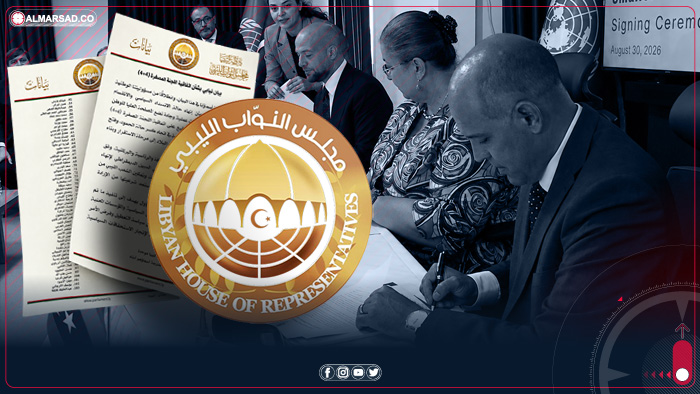
Al-Koni said the decree appointed a HNEC chairman different from the candidate named in the agreement to implement the political roadmap, signed during the 4+4 mini-meeting on 30 August 2026.
He argued that the decree did not constitute implementation of the agreement, but instead created a unilateral and conflicting process, pre-empted the agreed approval mechanism and threatened to drag HNEC into a new dispute over the legitimacy of its composition.
The 4+4 agreement had recommended appointing Dhaou Ibrahim Al-Hamali Attia as chairman of HNEC’s Board of Commissioners, while the decree issued by Presidential Council Chairman Mohammed Al-Menfi retained Emad Al-Sayeh as head of the commission.
Al-Koni’s rejection — after he attended the signing of the 4+4 agreement and welcomed its outcomes — underscores the absence of the collective approval required for Menfi’s decree.
Political, Legal and Judicial Action
The Presidential Council deputy stressed that the council’s chairman did not constitute an authority independent of the council and could not substitute his individual will for its collective will.
He added that labelling a measure a “presidential decree” did not validate it if it had failed to meet the procedural requirements for issuance, nor did it shield the decree from legal challenge or suspension.
Al-Koni warned that continuing this approach would transform the Presidential Council from a collectively led institution into a nominal cover for unilateral decisions, exposing its measures to a loss of legal force and rejection by state institutions.
He said he would not accept the Presidential Council’s will being reduced to an individual decision or its name being used to grant legitimacy to a measure issued outside its collective mechanism.
Al-Koni vowed to take the necessary political, legal and judicial action to halt what he described as an overreach and prevent the decree from producing any legal or administrative consequences.