Protective measure for archaeological mosaics in Sabratha
Libya – A news report published by the Greek English-language site Greek Reporter confirmed that mosaics in Roman baths in Sabratha have been reburied after years of deterioration.
Covering about 150 square metres of fragile floors
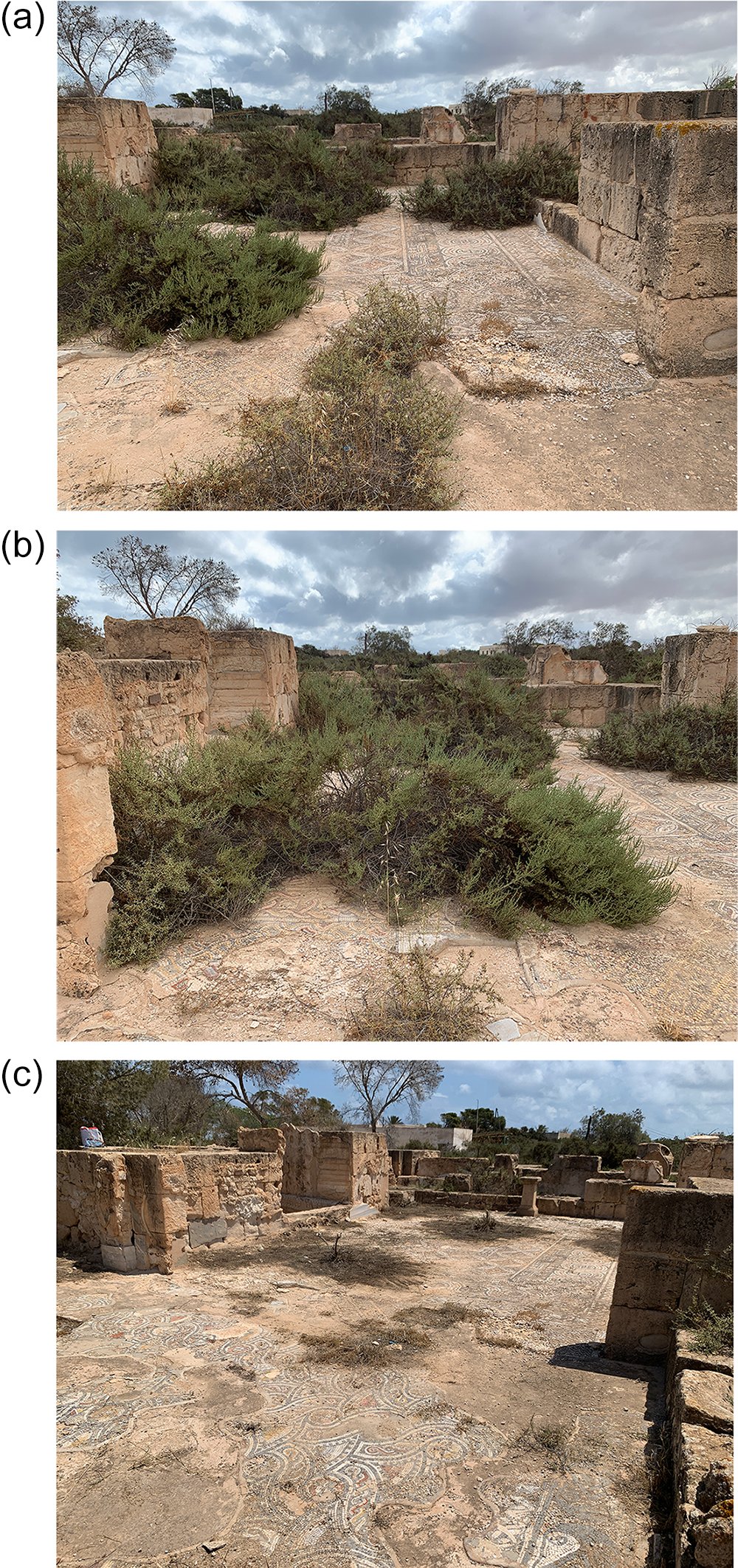
The report, followed and translated by Al-Marsad, said the work was carried out at the archaeological site in Sabratha to counter exposure to the weather and plant growth, with researchers covering about 150 square metres of fragile mosaic floors inside the baths of Regio VII.
Layers of soil, sand and gravel
According to the report, layers of local soil, sand and gravel were used to protect the remains while keeping them accessible for any future maintenance. It said the work lasted five days in April 2025 and was carried out by British researcher Will Wootton and colleagues in cooperation with the Department of Antiquities.
Cultural Heritage Management in Libya project
The report said the effort came under the Cultural Heritage Management in Libya project, stressing that reburial offers a practical way to protect the mosaics even though they are not on the main visitor route, and mimics protective conditions that preserved remains underground for centuries. It added that the operation reduces the cost and labour needed to maintain exposed ancient floors.
Cold, warm and hot rooms and fine decoration
It said the baths included rooms for cold, warm and hot water, arranged along a carefully planned route, while the interiors featured wall paintings, stucco decoration, sculpture and finely made mosaics.
Highly fragile sections and deep-rooted plants
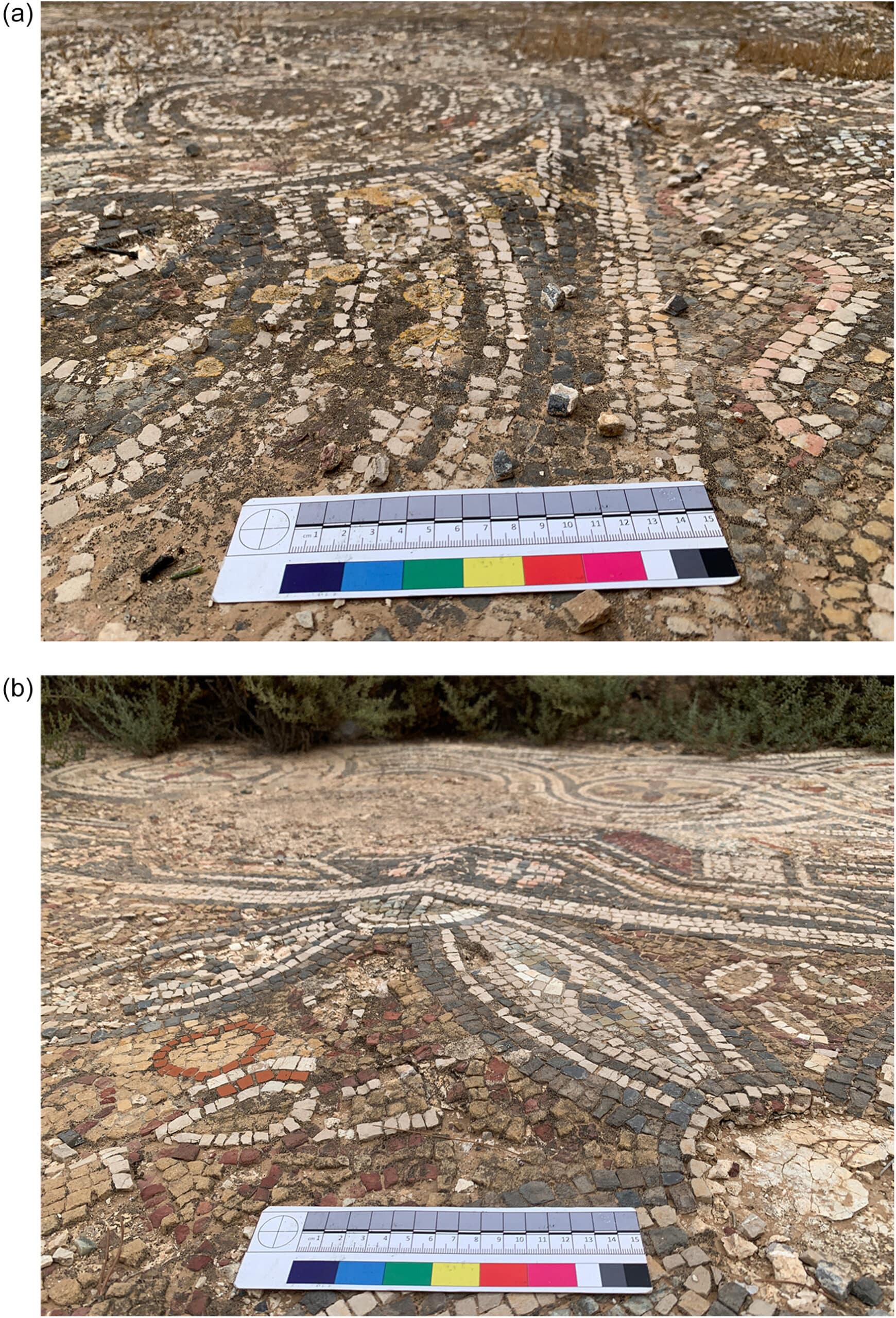
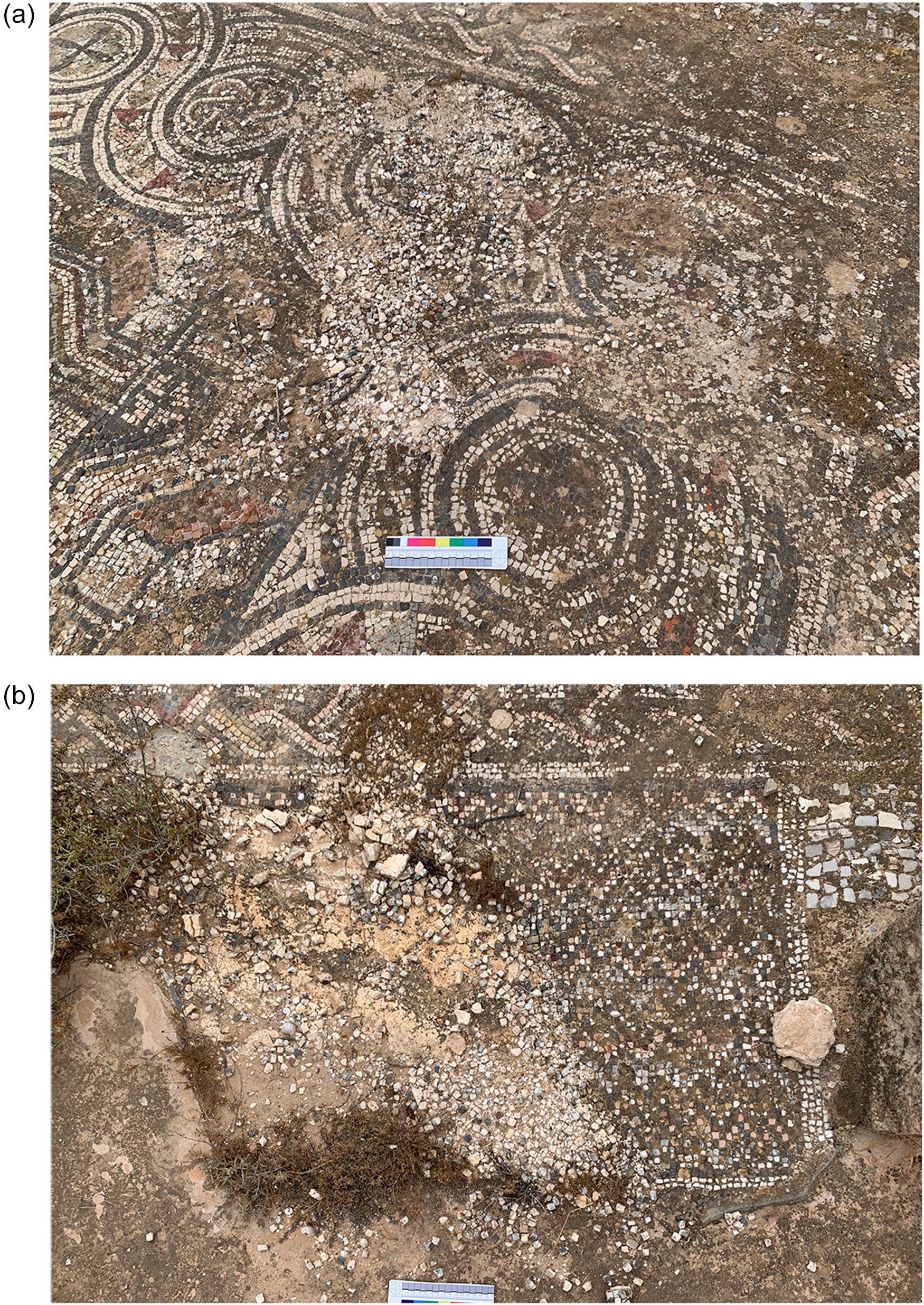
The report said restoration experts found loose mosaic pieces known as tesserae, as well as sections where the decorated surface had detached and risen, and that some areas were so fragile that the pressure of walking on them could have caused collapse. It added that workers carefully trimmed plants rather than pulling deep roots to avoid further damage, while the team fenced the complex while preparing for reburial, balancing conservation with public access.
Plastic mesh and supports for raised sections
Researchers documented the floors’ condition before covering them and placed open-weave plastic mesh over the most fragile areas, while pottery and wooden vessels and curved clay tiles were used to protect raised sections from the weight of the material above.
Three layers and a cover about half a metre thick
Workers then laid three protective layers: about 10 centimetres of local soil directly over the mosaics, then about 35 centimetres of coarse sand, then about 5 centimetres of gravel, bringing the final cover to about half a metre in the main rooms.
Drainage system and limits on plant growth
The report said the system was designed to allow water through while limiting plant growth, and that the layers can be removed if specialists return later to restore or study the mosaics. It noted that not all parts of the baths could be treated: fragile wall mosaics inside two basins were left exposed because the team could not obtain suitable materials for a safe support system.
122 tonnes of material and a cost of 18,000 dinars
The operation required moving about 76 cubic metres of material weighing about 122 tonnes within days, at a cost of 18,000 dinars to cover six rooms. About 11 people worked on site each day — project team members, Department of Antiquities staff, university students and local workers — for about 400 labour hours, finished in roughly four and a half days. Researchers described it as the second documented mosaic reburial in Libya.
Local experience and future monitoring
The report said the work gave local heritage staff practical experience in a conservation method that can be applied at other threatened sites, and stressed that the buried mosaics will need periodic monitoring for vegetation growth, erosion or drainage problems.
Heavy rain brought no visible problems, but reburial is not final
Researchers said heavy rain after the intervention caused no visible problems, while stressing that reburial is not a final answer to the mosaics’ conservation needs, as the floors still require stabilisation if expertise and funding become available.