One-month deadline to move current pupils into national schools; ban on enrolling Libyans at all levels
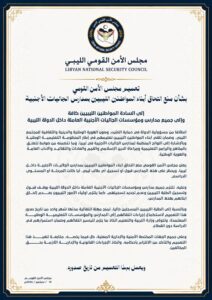
Libya – Libya’s National Security Council has issued a circular to citizens and to schools and institutions run by foreign communities operating in the country, barring the children of Libyan citizens from attending foreign community schools.
Protecting national and religious identity
The council said the decision stems from the state’s responsibility to protect young people and safeguard the national, religious and cultural identity of Libyan society, and to ensure citizens’ children receive their education within the national education system.
It pointed to regulations governing foreign community schools in Libya, including rules on curricula and education programmes and on respecting Islam, values, customs, traditions, public morals and national identity.
Ban on enrolment at all levels
The council announced a ban on Libyan citizens’ children attending foreign community schools inside Libya, and prohibited accepting or registering any Libyan pupil in them at any stage or level of study.
It stressed that all foreign community schools and institutions must stop accepting and registering Libyan pupils and must not renew their enrolment, and required Libyan parents not to place their children in these schools.
One-month transitional period
The council gave Libyan pupils currently enrolled a one-month transitional period from the date of the circular to complete their transfer to approved national schools and education institutions.
It tasked the Education Ministry with taking the necessary steps to ease their transfer and ensure they continue studying without interruption.
Action against violators
The National Security Council called on the relevant security and administrative bodies, each within its remit, to follow up implementation of the circular, ensure compliance with its provisions, and take the legal and administrative measures required against violators.