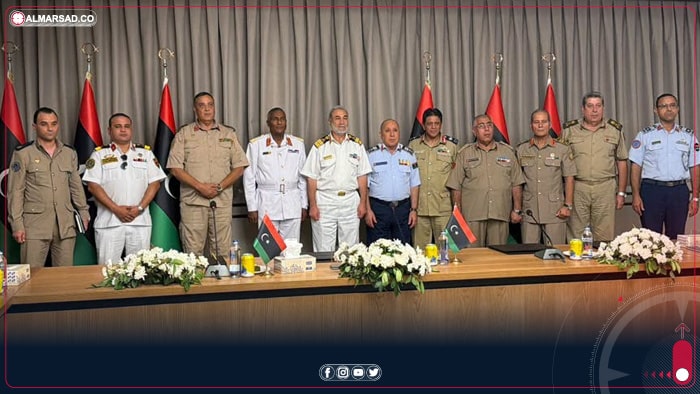
Turkish opening to eastern Libya while keeping channels westwards; experts warn of entrenching a split shielded by foreign interests
Libya – An analytical report has highlighted Turkey’s opening to eastern Libya while keeping channels of contact with the west, alongside the US push to address the Libyan crisis.
A pragmatic bid to close a gap in relations
The report, published by the US news site Inkstick Media and followed and translated by Al-Marsad for its main analytical points, quoted Turkish foreign-policy specialist Burak Can Celik as saying the opening is a pragmatic attempt to close a gap in relations.
Celik added that the camp of Armed Forces Commander Field Marshal Khalifa Haftar gives Ankara an opportunity to become an important partner in the east and a potential mediator in Libyas political and security landscapes.
Preserving the 2019 agreements
Political researcher Nebahat Tanriverdi said the opening to eastern Libya carries a forward-looking vision aimed at building a comprehensive nationwide strategy able to withstand the political reshaping expected in Libya.
She said Turkish priorities are to preserve the security and maritime agreements concluded in 2019, secure a role in integrating Libyan security institutions and expand Turkeys presence in reconstruction efforts.
She added that Ankara is not seeking to play a neutral mediator so much as to shape political and security arrangements while protecting its own interests.
The defence industry and the eastern market
Former UN Libya expert Amanda Kadlec said Turkey is seeking to expand its defence industry and secure reliable clients, including parties inside Field Marshal Haftars camp, arguing that the centralised power structure in the east may offer a clearer and more direct commercial relationship.
She said the overlapping interests of armed groups in the west present Ankara with a more fragmented set of actors, and that Turkey’s influence remains limited amid competing internal and external parties in Libya.
She added that the matter is about securing Turkeys own interests as a hedge tied to how events unfold, warning that Turkish military support for western Libya in 2019 may weaken the chances of Ankara being seen as a legitimate and trusted mediator in the east.
Fears of eroding trust in the west
Tanriverdi said Ankaras credibility in western Libya rests on its intervention to break what was described as the siege of Tripoli, meaning that deepening ties with Field Marshal Haftar’s camp could shake that trust.
She noted that Turkey stresses to its western partners that its contact with the east is an attempt to adapt to a changing political equation, not a radical realignment.
The break-up of the binary split and the Boulos initiative
Libya specialist Jason Pack argued that the development is less about Turkey drawing closer to Field Marshal Haftar than about the break-up of the binary split Libya has seen over the past four years, when different international blocs backed east and west.
He added that every regional party appears keen to engage with the initiative launched by Massad Boulos, senior adviser to US President Donald Trump for Arab and African affairs, while seeking the best possible outcomes for its local allies.
Relative stability or lasting division?
Celik said competition among Turkey and other powers for influence through commercial and diplomatic channels may reduce the risk of renewed war, but could leave Libya divided and relatively stable — a situation outside parties may accept so long as they can protect their interests without seeking deeper political unification.
He added that political unification may no longer be essential for Ankara if it can keep its influence in the west and secure energy, reconstruction, defence and trade opportunities in the east, warning of an entrenched split in which foreign powers shield their interests and local elites retain power thanks to continued external support.
Turkish-Egyptian rapprochement and alignment with Washington
Turkish foreign-policy specialist Suat Dilgen said Turkey wants to protect its political interests regardless of who holds power, and therefore must keep channels open with all parties, noting that the Turkish-Egyptian reconciliation paved the way for Ankaras rapprochement with Field Marshal Haftar.
He added that since last Julys NATO summit Ankara has increasingly aligned its Libya policy with Washington.
Mezran doubts a lasting settlement via the Boulos initiative
By contrast, political analyst Karim Mezran cast doubt on the Boulos initiatives ability to reach a lasting settlement of the Libyan crisis, arguing that US mediation seeks less to solve the crisis than to bring together the two centres of power the war produced, and stressing that a real settlement requires external security guarantees and the involvement of Turkey, Egypt and other major powers.